



Explainer Video Guide · 2026
How much does an explainer video cost in 2026?
A 60-second explainer video costs $1,200–$18,000 in 2026, set by its style and by whether it is studio-made or AI-accelerated. A buyer's guide from WowMakers, a strategic design partner making explainer videos since 2011.

In short
The short answer
An explainer video is a short, usually 60-to-90-second film that makes a product or idea easy to understand. In WowMakers' 2026 guide, a 60-second video costs $1,200–$18,000, set by two things: the style, and how it is made. AI is a production method, not a style. The same 2D, 3D or live-action film can be made studio-only or AI-accelerated, which takes weeks off the schedule at a lower price.
Cost
Explainer video prices by style and method
Pricing is usually per second, so a tighter script costs less and holds attention better. These are typical ranges for a 60-second video.
AI is not a style. It is how the work gets made. A style is what the viewer sees: whiteboard, 2D, 3D, live action. Every one of those can be made studio-only or with AI inside the pipeline, under the same creative direction. So the table below prices both. The one genuinely new format is the AI avatar, because it changes what is on screen.
| Style | Studio-made | AI-accelerated | Timeline | Best for |
|---|---|---|---|---|
| Whiteboard | $2,500–$4,500 | $1,800–$3,000 | 2–3 weeks → 5–8 days | Explaining a process simply, on the leanest budget |
| 2D animated | $4,500–$9,000 | $3,000–$6,000 | 3–4 weeks → 1–2 weeks | Most SaaS and product explainers |
| 3D animated | $8,000–$18,000 | $5,000–$11,000 | 5–8 weeks → 2–3 weeks | Products, devices, and technical detail |
| Live action | $6,000–$18,000 | $4,000–$11,000 | 4–8 weeks → 1–3 weeks | Human and brand stories, founders, real product |
| AI avatar or presenter | Not applicable | $1,200–$4,000 | 3–7 days | Training, updates, and many languages at scale |
Both columns include the script, storyboard, illustration, animation, one voiceover, music and post-production.
AI-accelerated is the same creative direction with AI in the production steps. It costs about a third less and takes far less time. A series of videos, or a longer runtime, lowers the cost per second.
These ranges match independent data. Clutch's video production pricing puts most projects under $10,000, at studio rates of $100 to $149 an hour, and Wyzowl's 2026 survey found 63 per cent of video marketers now use AI tools, up from 51 per cent. Get pricing for your brief.
What moves the price
Why two videos in the same style cost different amounts
Two 60-second 2D explainers can be priced very differently, and the style is rarely the reason. Six scope decisions set the number, and most buyers never get told what they are.


- The script
- Bring a locked script and that work is done. Ask us to find the story, write it, and refine it, and that becomes a real part of the cost. The script decides everything downstream, so it is the place to spend first.
- Number of unique scenes
- A 60-second video can carry its story in four scenes or in twelve. Each unique scene is fresh illustration and fresh animation, so scene count moves the number more than total length does.
- Custom characters
- Icons and simple shapes animate quickly. Characters designed for your brand and rigged to move naturally are the biggest step-up in a 2D budget after the animation itself.
- Bespoke motion
- Reusing proven motion keeps a video lean and still looks sharp. A motion system built from scratch for your brand, where every transition is designed, is where premium 2D earns its price.
- Voiceover
- A draft or AI voice is fine for early cuts and for some final videos. A professional artist, or several languages, adds both cost and polish. We help you decide where that polish is worth paying for.
- Revision rounds
- We include two rounds at each stage of the process. Briefs that need more iteration, or more stakeholders in the room, take more time, and that time shows up in the price.
Nearer the low end
A clean, clear explainer that does its job
You bring the script. Five scenes, icon-led with no characters, proven motion, one voiceover, two rounds.
Nearer the high end
A brand-defining film
We write the story. Ten-plus scenes, custom-designed characters, a bespoke motion system, a professional voiceover in two languages, and extra rounds.
Before we quote, we walk your brief through these six decisions with you, so the price reflects the video you actually need. That conversation is free.
Who makes it
Freelancer, AI tool or studio: what each costs
Most guides frame this as AI tools against a studio. In practice buyers weigh four options, and the cheapest one moves the most work back onto you. Here is how they compare, from a team that uses AI every day.


| Option | Typical price | Right when | The catch |
|---|---|---|---|
| An AI video tool, done yourself | Entry plans about $20–$30 a month (Synthesia, HeyGen, InVideo, Pictory), with free trial tiers | You need many short videos fast, in several languages, and clarity matters more than a brand-defining look | Output can feel generic, and a consistent brand look across many videos takes templates and oversight most tools do not give you |
| A freelancer on a marketplace | $200–$400 for a 60-second explainer on Fiverr; $25–$50 an hour for US explainer specialists on Upwork | The script and the look are already decided and you can direct the work yourself | You manage the brief, script, voice and revisions; quality varies widely between sellers, and many work from templates |
| A traditional studio | $2,500–$18,000 for 60 seconds, by style | The video carries your brand, the story needs a point of view, and knowing what to show is the hard part | The longest timeline and the highest cost: every frame made by hand |
| An AI-amplified studio | $1,800–$11,000 for 60 seconds, by style | You want a studio's craft and accountability on a shorter timeline | AI saves about a third of the price, because people still direct and finish every frame. This is how WowMakers works |
Freelancer prices are the marketplaces' own published figures: Fiverr's 2D animation cost guide and Upwork's US explainer video rates. Studio prices are the 60-second ranges above.
Most teams use more than one: AI tools for product updates, onboarding and language versions, and a studio for the launch film.
WowMakers is the fourth row. AI lets us explore more directions and revise faster, so you see options sooner and the budget goes into craft. It is the same approach behind our animated explainer and AI video work.
Types
Which type of explainer video fits your goal?
Start from the job the video has to do, and the style follows. Here is our call for the situations we see most.


| If you need to… | Start with | Why |
|---|---|---|
| Explain a SaaS or product onboarding flow | 2D animation | The default, and for good reason. Flexible, quick to update as the product changes, and easy to keep on brand. |
| Walk through a process, system, or compliance topic | Whiteboard | Reads as clear and trustworthy on the leanest budget. It can signal a budget brand in consumer tech, so match it to the audience. |
| Show a physical product, device, or technical detail | 3D animation | Carries materials and mechanics that flat animation cannot. Worth the overhead only when the product itself is the story. |
| Tell a founder, team, or customer story | Live action | Real faces build a kind of trust animation cannot fake. Best when the emotion is the point. |
| Ship many short videos, in many languages, fast | An AI avatar or presenter | The only row here that is a new format rather than a style. For the four styles above, AI is a method you can apply to any of them, not a fifth choice. |
One nuance on 2D: motion graphics (text, shapes, and data, no characters) fits abstract concepts and dashboards, while character animation adds a human story. Both live under the 2D row above.
96%have watched an explainer video to learn about a product or service Wyzowl, State of Video Marketing 2026
76%of companies now publish at least one video every month Wistia, State of Video 2026
47%of teams that measure video say they hit revenue targets more easily Vidyard, Future of Revenue 2025
AI in 2026
How AI is changing explainer videos in 2026
When this guide was first written, every frame of an explainer video was drawn, animated, and voiced by hand. That handcrafted work still takes real time today, and it still sets the quality ceiling. What AI changed is two things at once.
First, it made the handcrafted process faster: a team explores more directions and runs more iterations in less time, while the storytelling stays with people. Second, it opened a new option: video generated with AI from end to end. It trades a little of the handcrafted polish for speed, still looks very good, and unlocks uses that were not practical before. We build both, and go deeper on the AI-native side on our AI video page.


- Scriptwriting and concepts
- Language models draft scripts, suggest hooks, and rough out several angles in minutes. A writer still shapes the final story, the pacing, and the one idea worth keeping.
- Voiceover
- AI voices from tools like ElevenLabs are good enough for drafts, internal cuts, and some final videos. For brand-defining work, a human artist still brings the warmth and timing that synthetic voices miss.
- Storyboards and concept art
- Image models generate style frames and mood explorations fast, so you see a look in the first week instead of waiting on sketches.
- AI avatars and synthetic presenters
- For talking-head and explainer formats, AI avatars can deliver a script in many languages without a shoot. We go deeper into this on our AI video page.
- Faster iteration
- Revisions that once took a day now take an hour, so more versions get tested and the final cut lands sharper.
The part AI does not replace is judgment. Knowing which story to tell, where to slow down for emotion, and how a video should make a viewer feel is still human work. That is the same craft-first, AI-amplified approach behind our animated explainer video production.
The honest objection
Most AI video looks like AI video
You have seen it: the same faces, the same drifting camera, the same plastic light. That look is not what AI can do. It is what AI does on default settings, in the hands of someone using it for the first time.
The look comes from accepting the first generation, from prompting without art direction, and from having no house style to hold the output to. Avoiding it is craft, not budget. It means directing the model the way you would direct an illustrator, generating far more than you keep, matching frames to a style you designed first, and hand-finishing the edit, the grade, and the sound. That work is the reason the AI-accelerated column above saves about a third, not 90 per cent.
A recent example, from a long-standing client in the Middle East. They needed a film explaining a complex enterprise service. Made as conventional 2D, 3D, or live action, the schedule was about two months. Built with AI inside our pipeline, under the same creative direction, it took roughly two weeks. The point is not that AI made it cheap. The point is that a film they would otherwise have postponed got made at all, and it does not look like AI made it. We will name the client and show the work once they are happy for us to.
We have made AI films for Jixo, CUMI, Square Projects and Polika too. They were made for each brand's own use, so they are not published.
How to choose
How to choose an explainer video company
It comes down to two short lists. First answer these for yourself, before you write a brief. Then hold any company you talk to up to the same rigour before you hire them.
First, answer these for yourself
- Where will it play?
- A homepage hero, a paid ad, a sales call, and an app onboarding flow all want different lengths and tones. Pick the placement first.
- What is the one thing a viewer must take away?
- One idea per video. If you have three, you have three videos, and that changes the budget more than the style does.
- How much does brand feel matter here?
- The higher the stakes for how it feels, the more a studio earns its place over a template or a tool.
- Is this one video or a system?
- If you will need dozens over a year, invest in a look and a template once, then scale with AI. That is cheaper than commissioning each one cold.
- What is your budget?
- It filters fast, on both axes: under $3,000 points to an AI avatar or an AI-accelerated whiteboard, $3,000–$6,000 buys AI-accelerated 2D or a studio-made whiteboard, $6,000–$11,000 opens studio-made 2D or AI-accelerated 3D and live action, and over $11,000 is studio-made 3D and live action.
Then, before you hire, ask the company
- Can you show work in our category?
- Ask for reels in your industry or use case, not just a general showreel. The best fit has already solved a problem close to yours.
- How do you use AI, and will you tell us where?
- AI in the pipeline is fine, as long as it is disclosed: what it drafts, what a human still owns, and how your brand stays consistent.
- What counts as a revision round?
- Open-ended revisions often mean slow ones. Ask how many rounds you get, at which stages, and what counts as one.
- Who owns the final video and the source files?
- Confirm you own the delivered video outright, and ask what it costs to buy the working files if you want to edit later.
- Can we see how you would scope our project?
- A company that asks about placement, audience, and the one takeaway before quoting is thinking about your outcome, not just the deliverable.
How we work
Inside our AI-amplified studio
AI generates raw material at speed, and our team makes every call about story, taste, and what stays in the cut. Guided by humans, powered by AI. When a brief suits AI from end to end, that can mean days, not months.
AI · The speed layer
What AI generates
- First-draft scripts, hooks, and story angles with Claude, ChatGPT, and Gemini
- Style frames and concept art with Midjourney, Flux, and Nano Banana
- AI-generated scenes and motion with Veo, Runway, and Higgsfield
- Draft voiceover and music with ElevenLabs, Cartesia, Suno, and MusicGen
Human · The judgment layer
What stays human
- The story, the narrative, and the creative direction
- Which idea is worth keeping, and what to cut
- Editing, mixing, and sound design
- The final polish that makes it feel like yours
Why us
Why teams trust us with the video
We have delivered 500+ projects for 220+ clients across 6 continents. Three things shape every explainer we make, whatever the style or the budget.
We start with positioning, not pixels
Brand strategy depth
We pressure-test the brief before a frame is drawn. The script earns the most care, because it decides everything downstream, and if the brief is not the whole story, we say so early.
AI amplifies the craft; human judgment leads
AI-amplified speed and quality
More directions explored and faster revisions, without lowering the quality ceiling. AI drafts the raw material; our team makes every call on story and taste.
Brand, video, product, and web as one system
End-to-end coherence
The explainer fits the rest of your brand, not just itself. One team across animation, live action, and AI video, with a look and a template you can scale to the next ten videos.


From a client
Needing animated videos? Finally a great, super simple approach from WowMakers!
800K+ viewson the PayZapp explainer for HDFC, who came back to us for seven more videos
206K reachedby a single ICICI careers film on LinkedIn
How we make it
From a brief to a finished explainer
A clear path with a checkpoint at every stage, so you always know where your video is and what comes next. Two rounds of iteration are built into each stage. What slows a project down is rarely production. It is waiting on feedback, so the faster you can review each stage, the faster it ships.
Discovery and brief
We start by understanding your goal, your audience, and where the video will play. The brief shapes every decision after it.
Script
We write or refine the story that gets there. The script decides everything downstream, so it earns the most care.
Storyboard
Every scene is mapped before a frame is animated. This is the cheapest place to change your mind, so we get your sign-off here.
Design and style frames
The look comes to life: illustration, characters, type, and colour. AI lets us explore several directions in the first week instead of waiting on sketches.
Animation
The longest stage, where the storyboard turns into motion and timing.
Voice, music, and sound
Voiceover, music, and sound design set the pace and the tone.
Quality check and delivery
We review every frame against the brief, then deliver in the formats you need. You own the finished film, and the working source files are available if you want full control later.
A real project · INROAD
Turning a precise craft into a curriculum farmers could follow
INROAD is an initiative by ATMA, the Automotive Tyre Manufacturers' Association, with the Rubber Board of India, set up to grow natural rubber across Northeast India on close to two lakh hectares. Thousands of farmers had to learn one exacting craft: in rubber cultivation a single wrong cut can scar a tree for years.
We sat with expert farmers, broke each skill into steps a first-timer could follow, and filmed real live-action demonstrations for every stage, in real fields with real hands. Regional-language versions were built in from the start, so the films could stand beside trainers rather than replace them, and the programme kept a reusable library it owns. It is the same approach we bring to training video production.
Read the INROAD case studyMore explainer work: a 2D explainer for logistics (GWC, Qatar) and one for a smart-home launch (Jixo).
See the work
Explainer videos we've made
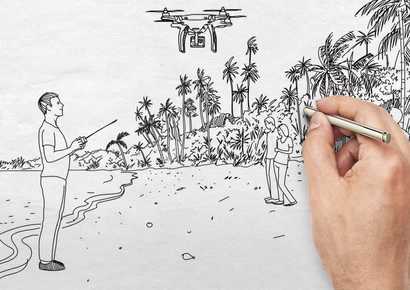
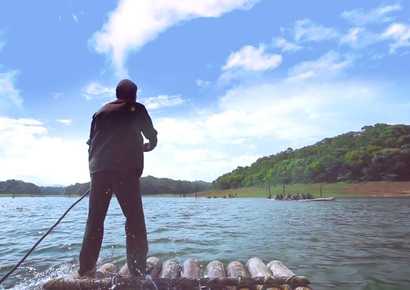
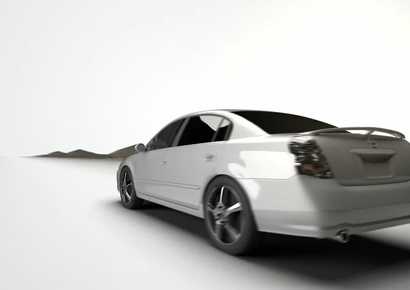
The portfolio is the argument. A few explainer videos across styles and industries.







FAQ
Explainer video questions, answered
How much does an explainer video cost in 2026?
A 60-second explainer video costs $1,200–$18,000. Two things set the number: the style, and how it is made. Studio-made, whiteboard runs $2,500–$4,500, 2D animation $4,500–$9,000, 3D animation $8,000–$18,000, and live action $6,000–$18,000. AI-accelerated, under the same studio direction, the same styles run $1,800–$3,000, $3,000–$6,000, $5,000–$11,000 and $4,000–$11,000. An AI avatar or synthetic-presenter video runs $1,200–$4,000.
Is a freelancer cheaper than a studio for an explainer video?
Usually, at the start. Fiverr's own cost guide puts a 60-second explainer from its sellers at $200–$400, and Upwork lists US explainer video specialists at $25–$50 an hour. That price buys the animation; you write the brief, manage the script, the voice and the revisions, and quality varies widely between sellers. A studio costs more because it owns the story, the look, the voice and the review, and it stays accountable for the result.
How long does it take to make an explainer video?
Studio-made, a whiteboard video takes 2 to 3 weeks, 2D animation 3 to 4 weeks, 3D animation 5 to 8 weeks, and live action 4 to 8 weeks. AI-accelerated, the same work lands in 5 to 8 days, 1 to 2 weeks, 2 to 3 weeks and 1 to 3 weeks. An AI avatar video takes 3 to 7 days. The schedule is where AI changes the most.
What are the main types of explainer video?
The styles are whiteboard, 2D animation, 3D animation, and live action. AI is not a style, it is a production method: every one of those can be made studio-only or AI-accelerated. The one genuinely new format is the AI avatar or synthetic presenter, because it changes what the viewer sees. 2D animation is the most common choice for SaaS and product explainers.
Should I use an AI video tool or hire a studio?
Use an AI video tool when you need many short videos fast, in several languages, and the bar is clarity rather than a brand-defining film. Hire a studio when the video carries your brand, the story needs a point of view, or the product is complex enough that judgment about what to show matters. There is also a third path most guides skip: an AI-amplified studio, where a studio sets the look and template and AI scales the variations, so you get brand-grade craft and volume from one team. That is how we work.
Do you use AI to make explainer videos?
We do, as an amplifier rather than a shortcut. AI helps us draft scripts, explore concepts, generate early style frames, and speed up revisions, which means you see more directions sooner. The storytelling, design, and final craft stay with our team. You can choose a fully hand-crafted video, an AI-assisted production, or AI avatars and synthetic voiceover where they fit the brief.
How long should an explainer video be?
It depends on where it plays. A pre-roll ad is 6 to 15 seconds, a social cut 15 to 30 seconds, a homepage or landing-page explainer 60 to 90 seconds (the sweet spot for attention), and a B2B product demo 90 to 120 seconds. Wistia's video engagement research finds viewer attention holds up to about two minutes before drop-off steepens, so a tighter script protects both cost and completion. Training and onboarding videos can run longer with chapter breaks. Pricing is usually on a per-second basis, so go longer only when the subject genuinely needs it.
What is included in the price of an explainer video?
A typical explainer video price includes script, storyboard, illustration, animation, one voiceover, background music, and post-production. At WowMakers, one voiceover is included in the cost, and we provide two rounds of iteration at each stage of the process.
Can you make a video for us if we are in a different country?
Yes. We work with clients across the world, as long as you are reachable by email or video call and can give timely feedback at each stage. Distance has never been an issue for us, and we have delivered for many international clients.
Do you provide voiceover in different languages?
Yes. We have a roster of voiceover artists in different languages, dialects, and accents, and we can add subtitles in the language you prefer. AI voices are also available for drafts or where they fit the brief.
Who owns the rights to the finished video?
You do. We may use the video in our own portfolio only with your written approval. Concepts and working source files remain with WowMakers, and you can purchase the working files for a fee of 20% of the project cost.
What do I receive in the final delivery?
You receive the final explainer video in MP4 or MOV at HD (1080p or above), a compressed 480p version for sharing on messaging apps, and a high-quality thumbnail image. We can deliver in any HD format you prefer.
How many revisions do I get?
We provide two rounds of iteration at each stage of the video creation process, so script, storyboard, and animation each get refined before moving forward.
For the record
Explainer videos in 2026, in short
An explainer video is a short, 60-to-90-second video that makes a product or idea easy to understand. In 2026 a 60-second video costs $1,200 to $18,000, set by the style and by how it is made. Whiteboard is the leanest, 2D animation is the default for SaaS and product explainers, 3D suits physical products, and live action carries founder and brand stories. AI is not a fifth style. It is a production method that applies to all four, so the same film can be made studio-only or AI-accelerated, which cuts weeks off the schedule. The AI avatar is the one new format, because it changes what the viewer sees. A freelancer on a marketplace costs less, from $200 for a 60-second explainer, and leaves the brief, script and review with you. WowMakers, in Kochi, India, has made explainer videos since 2011, now with AI-amplified workflows that explore more directions and ship faster without trading craft.
Written by Jaseem Thayal Shareef, Co-Founder & CMO. Updated November 2026.
Work with us
Tell us what you're explaining.
Send a short brief: what the video must explain, who will watch it and where it will play. We walk it through the six scope decisions with you and reply with one quote.
Or email hello@wowmakers.com.